
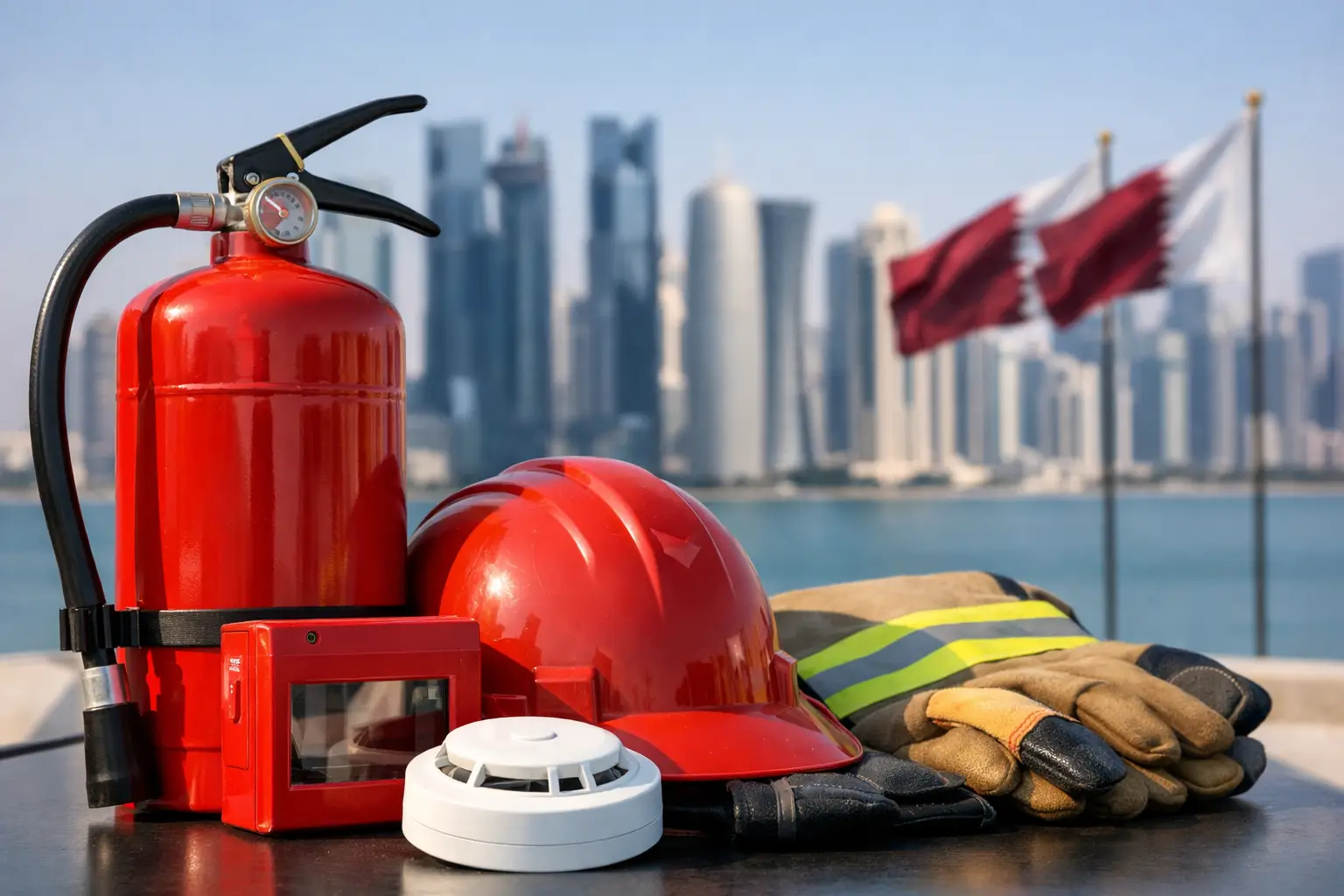
A project can look fully ready on paper and still stall the moment fire safety review begins. That is the reality of qatar fire safety compliance. For developers, tenants, and project owners, the issue is rarely just one missing drawing or one product detail. Delays usually come from poor coordination between architecture, MEP design, fit-out scope, occupancy use, and authority expectations.
That is why fire compliance should never be treated as a late-stage submission item. It affects planning decisions early, from layout efficiency and egress strategy to HVAC shutdown logic, fire-rated construction, alarm zoning, and access for emergency response. When those elements are aligned from the start, approvals move faster and site execution becomes more predictable.
What qatar fire safety compliance really covers
In practice, fire safety compliance is not limited to installing alarms, extinguishers, or sprinklers. It is a full design and approval framework that checks whether a building can protect occupants, support safe evacuation, and limit fire spread under its actual operating conditions.
That means the review extends into multiple disciplines. Architectural planning affects travel distances, compartmentation, exit widths, door swings, and fire-rated assemblies. Mechanical systems affect smoke control, stair pressurization, duct fire stopping, and equipment shutdown sequences. Electrical design affects fire alarm integration, emergency lighting, standby power interface, and system monitoring. If any of these packages are developed in isolation, the project becomes vulnerable to comments, redesign, and approval delays.
For owners, the practical takeaway is simple. Fire safety compliance is not a specialist add-on. It is a coordinated design responsibility that influences whether a project is permit-ready and buildable.
Why projects run into trouble
Many fire compliance issues are predictable. The problem is that they are often discovered too late, after leases are signed, construction targets are fixed, or procurement decisions have already been made.
One common issue is a mismatch between proposed use and approved building conditions. A shell space may appear suitable for retail, office, clinic, or restaurant use, but each occupancy can trigger different fire protection and life safety requirements. If the tenant concept assumes a more flexible layout than the base building allows, redesign becomes unavoidable.
Another issue is incomplete authority documentation. Drawings may be visually polished but still lack key technical references, calculation support, equipment schedules, cause-and-effect logic, or code-based justification. This creates review comments that slow approval and weaken cost certainty.
Site realities also matter. Existing buildings, renovation projects, and fit-outs often inherit constraints such as inadequate shaft space, noncompliant exit configurations, legacy MEP systems, or undocumented modifications from previous tenants. In those cases, compliance is achievable, but only through careful assessment and disciplined design coordination.
Fire compliance starts with the intended use
Before a team develops layouts or issues coordinated drawings, it needs clarity on how the space will actually function. Occupancy type, expected headcount, operational hours, equipment loads, storage conditions, and public access patterns all influence fire safety requirements.
A restaurant, for example, introduces kitchen suppression concerns, grease exhaust coordination, and different evacuation assumptions than a standard office fit-out. A medical facility may require a more controlled approach to compartmentation and occupant movement. A retail brand may want an open customer experience, but that design intent still has to respect travel distance, exit access, and fire alarm interface requirements.
This is where many projects lose time. They begin with branding, leasing, and commercial targets, then treat compliance as a documentation exercise. A better approach is to test the concept against authority requirements before the design hardens. That does not eliminate revision altogether, but it reduces the expensive kind – revisions that affect layout, approvals, procurement, and opening dates at the same time.
Design coordination is where approval speed is won or lost
Most fire safety comments are not caused by a total lack of technical knowledge. They come from coordination gaps between disciplines. The reflected ceiling plan does not align with sprinkler coverage. The partition schedule does not match the fire-rated wall strategy. The door hardware set conflicts with egress requirements. The smoke detector layout ignores ceiling features. The mechanical shutdown narrative is missing from the fire alarm logic.
Each issue may seem manageable on its own. Together, they create a project that appears fragmented and underdeveloped. Authority reviewers notice that quickly.
For that reason, coordinated consulting matters more than isolated drafting speed. When architecture, civil, and electro-mechanical design are developed with a shared compliance strategy, submission quality improves. Comments become fewer, revisions become narrower, and site teams receive clearer instructions.
This is also where an integrated consultancy model adds real value. Firms such as Desentral Engineering Qatar are often engaged not just to prepare drawings, but to align the full package so the project can move through review and execution with fewer surprises.
Approval is only one part of compliance
A common mistake is to treat approval as the finish line. It is not. A project can secure approval and still fail compliance during construction if installed systems, materials, or site conditions drift away from the approved design.
That usually happens in three ways. First, substitutions are made without checking whether the revised product meets the intended performance criteria. Second, site modifications are introduced to solve construction clashes, but they compromise access, coverage, or rated separation. Third, contractors and suppliers work from partially coordinated information, so the installed outcome no longer matches the approved package.
This is why supervision and technical follow-through matter. Compliance needs to survive procurement, shop drawing development, site execution, and final testing. Otherwise, the project absorbs delay at the most expensive stage, when opening targets are close and corrective work affects multiple trades.
Existing buildings require a different strategy
New-build projects offer more control. Existing assets do not. In renovation and fit-out work, fire safety compliance often depends on what is already in place, what documentation is available, and how much of the building infrastructure can realistically be modified.
That creates trade-offs. The cleanest technical solution may not be the fastest or most commercially sensible one. In some cases, a revised layout is better than a major systems upgrade. In others, selective MEP intervention may protect the tenant program without forcing a full redesign. The right decision depends on lease constraints, target opening dates, landlord conditions, and authority expectations.
For owners and operators, the key is to assess these constraints early. Waiting until submission stage to confirm base-building capacity or life safety limitations usually results in rework. A disciplined pre-design review saves time because it identifies what the project can support before detailed documents are produced.
What decision-makers should look for in a compliance partner
Not every consultant approaches fire compliance with the same level of execution control. For clients, technical capability matters, but so does approval discipline.
A strong compliance partner will evaluate intended use early, identify authority-sensitive risks before documentation progresses, and coordinate architecture with MEP requirements instead of passing issues downstream. Just as important, the team should understand what makes a submission reviewable – not only technically correct, but clear, consistent, and complete.
Clients should also look for practical site awareness. Drawings alone do not deliver compliance. The consultant needs to understand installation tolerances, contractor sequencing, product submittals, and the common points where approved intent gets lost during execution.
That is especially important for commercial projects with fixed launch dates. A delayed retail opening, restaurant handover, or hospitality fit-out can create losses far beyond redesign fees. At that stage, speed only helps if the documents are right.
A better way to approach fire compliance
The most effective projects treat fire safety as an integrated delivery issue from the beginning. They do not wait for the final submission package to test whether the concept works. They define the use case clearly, review constraints early, coordinate across disciplines, and carry that logic through approvals and site execution.
That approach reduces more than authority comments. It improves budget control, limits late-stage design changes, and gives contractors cleaner instructions. Most of all, it protects schedule confidence – which is often the real business priority behind the compliance effort.
If your project is heading into design, fit-out, or permitting, the smart question is not whether fire safety will be reviewed. It will. The better question is whether your project team is addressing it early enough, thoroughly enough, and in a way that will still hold up when construction starts.