
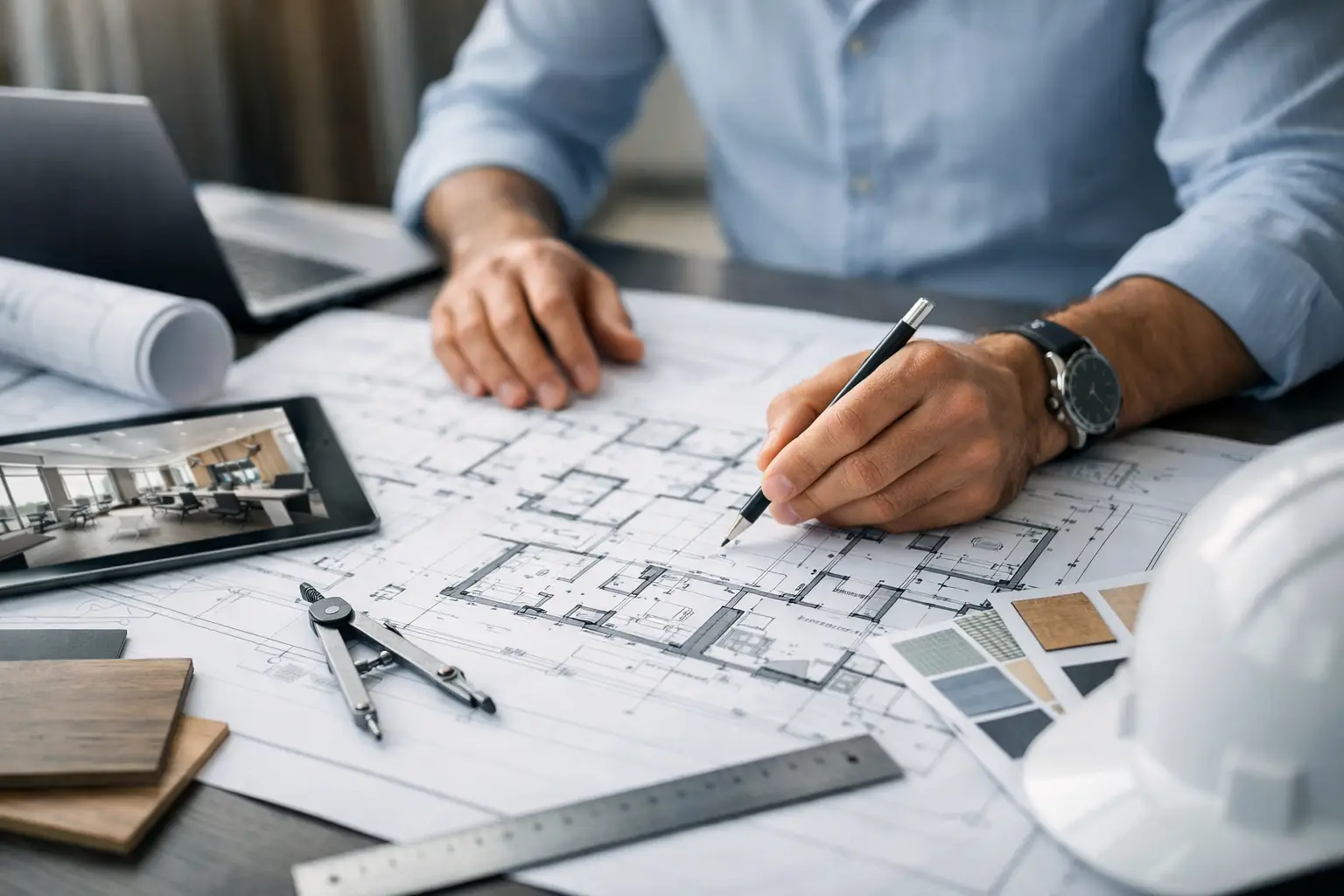
A fit-out package usually fails long before construction starts. The problem is rarely one missing note or one late revision. It is usually poor coordination between architecture, MEP, authority requirements, and site conditions. That is why understanding how to prepare fit out drawings matters for more than documentation. It affects approvals, procurement, construction sequencing, and final project quality.
For owners, tenants, and project managers, fit-out drawings are not a formality. They are the working instructions that connect design intent to actual delivery. If the drawings are incomplete, unclear, or inconsistent across disciplines, the result is predictable – RFIs increase, approvals slow down, contractors price risk into their bids, and site changes become expensive.
What fit-out drawings need to achieve
Fit-out drawings should do three things at the same time. They need to communicate the design clearly, show technical compliance, and allow contractors to build without guesswork. A drawing set that looks polished but leaves coordination gaps is not doing its job. Neither is a technically detailed set that ignores the approval pathway.
The exact scope depends on the project. A restaurant, office, retail unit, clinic, or hospitality space will all require different levels of detail. A simple internal refresh may move quickly with limited revisions. A project involving kitchen exhaust, fire alarm changes, added plumbing, or structural modifications will require a much more disciplined set of coordinated submissions.
That is the first principle: fit-out drawings are not just about drafting. They are about translating business requirements into buildable, code-compliant information.
How to prepare fit out drawings in the right sequence
The most efficient way to prepare fit out drawings is to build the package in stages. Teams that rush into drafting before validating the brief and site conditions often spend more time revising than designing.
Start with the project brief and operational requirements
Before any linework begins, define what the space must do. This includes occupancy, workflow, customer experience, staffing, equipment, storage, branding, and service needs. For a retail tenant, that may mean display zones, back-of-house requirements, and signage criteria. For an office, it may mean workstation density, meeting rooms, IT requirements, and acoustic needs.
This stage sounds basic, but it drives every later drawing decision. Ceiling layouts, power loads, HVAC zoning, lighting, plumbing points, and fire protection changes all come from the operating model of the space. If the brief is vague, the drawings will be vague.
Verify the as-built condition
Many fit-out problems begin with incorrect base drawings. Never assume the shell, existing services, slab levels, or landlord information are fully accurate. A proper site survey should confirm dimensions, structural elements, access points, existing MEP services, drain locations, risers, soffit heights, and any constraints that will affect the design.
This is where discipline saves time. If the actual site differs from the base plans, even small discrepancies can affect partition layouts, reflected ceiling plans, and equipment placement. Accurate as-built information reduces redesign and protects the approval process.
Develop the space plan before technical detailing
Once the brief and site data are confirmed, the next step is the proposed layout. This usually includes partition plans, furniture or equipment layouts, circulation paths, and room functions. At this point, the key question is not whether the plan looks good on paper. It is whether the plan can actually support code requirements, servicing, and construction.
For example, a layout may work architecturally but fail once duct routing, electrical distribution, and fire safety requirements are introduced. Good fit-out planning tests these issues early rather than treating them as later consultant comments.
Core drawing types in a fit-out package
A complete fit-out set typically includes architectural, MEP, and authority-related drawings. The exact package varies by use and jurisdiction, but the logic stays the same: every drawing should support either approval, pricing, or construction.
Architectural drawings
Architectural drawings usually form the base package. These often include existing and proposed plans, demolition plans where required, partition layouts, floor finishes, reflected ceiling plans, elevations, sections, joinery details, door schedules, and material references.
Clarity matters more than volume. A thin package with precise annotations is often more useful than a thick set filled with repeated or conflicting information. Dimensions, levels, room names, wall types, and finish references should be consistent throughout.
MEP coordination drawings
Fit-out drawings are rarely complete without mechanical, electrical, and plumbing coordination. HVAC layouts, diffuser locations, exhaust systems, power plans, lighting layouts, data points, emergency systems, water supply, drainage, and equipment connections all need to align with the architectural design.
This is also where many projects lose time. If lighting conflicts with ceiling features, or if drainage points do not match the kitchen or pantry equipment layout, site revisions follow. MEP should not be layered onto the architecture at the end. It should be developed in parallel.
Fire and life safety information
Depending on the project, fit-out drawings may require fire alarm modifications, sprinkler coordination, exit signage, emergency lighting, compartmentation details, and occupancy-related compliance checks. This is not a secondary package. In many commercial interiors, fire and life safety compliance directly affects approval timing and operational opening dates.
Where authority submissions are involved, the drawing set must reflect applicable review requirements from the beginning rather than relying on later corrections.
Coordination is what makes drawings buildable
A fit-out drawing set is only as strong as its coordination. This is the step that separates a drafting exercise from real project delivery.
If a partition plan shows a feature wall, the reflected ceiling plan should recognize it. If the ceiling changes, lighting and air distribution should respond. If equipment requires power, drainage, or ventilation, each discipline should show that requirement in its own drawings without contradiction.
That may sound obvious, yet many project delays come from simple coordination failures. One drawing calls for full-height glass, another shows a bulkhead crossing the same area, and a third places a return air grille where signage is supposed to go. None of these mistakes are dramatic in isolation. Together, they slow procurement, raise contractor claims, and weaken confidence in the package.
For that reason, drawing reviews should happen as coordinated workshops, not isolated markups. Architecture, civil considerations where relevant, MEP, and approval strategy need to be reviewed together.
How to prepare fit out drawings for approvals
If the project requires formal authority submission, the drawing set must be prepared with approval logic in mind. A construction-ready drawing is not always the same as an approval-ready drawing. Some projects require specific sheet structures, code references, calculation support, equipment schedules, or discipline-specific declarations.
This is especially relevant in regulated environments where authority comments can significantly affect timelines. In Qatar, for example, fit-out packages often need to align with landlord requirements and authority expectations across building use, fire safety, and MEP modifications. Teams that understand the submission pathway early can avoid avoidable redesign cycles.
Approval readiness usually depends on three factors: the drawings are technically correct, they are properly coordinated, and they present information in the format reviewers expect. Missing one of those can cause delay even when the design itself is sound.
Common mistakes that weaken fit-out drawings
Most drawing problems are not caused by lack of software skill. They come from process gaps.
One common mistake is designing from outdated base information. Another is under-scoping MEP changes because the fit-out appears minor at first glance. Some teams also produce attractive layouts without confirming equipment data, ceiling void limitations, or service capacities. Others submit too early, hoping comments will fill the gaps. That usually creates more rounds of revision, not faster approvals.
There is also a trade-off between speed and completeness. Fast drafting can help early decision-making, but rushing technical detail into a submission set often backfires. The smarter approach is to issue drawings in controlled stages, with clear review gates before approval and construction release.
What decision-makers should expect from the consultant team
If you are commissioning fit-out drawings, the standard should be straightforward. The consultant should be able to explain the drawing scope, identify approval risks early, coordinate across disciplines, and issue documents that contractors can price and build from with confidence.
That means more than producing plans. It means managing interfaces between design intent, code compliance, landlord conditions, and execution. For clients with opening deadlines, every unresolved drawing issue eventually becomes a site issue, a cost issue, or an approval issue.
This is where an integrated consultancy model has practical value. When architecture, engineering, and approval planning are managed together, the project team can make faster decisions with fewer blind spots. Firms such as Desentral Engineering Qatar are often engaged for exactly this reason – not just to draw the project, but to move it toward approval and execution with tighter control.
Strong fit-out drawings do not need to be excessive. They need to be accurate, coordinated, and specific enough that the next person in the chain can act without assumptions. If your drawing set can do that, it is already doing more than documenting a design – it is protecting the schedule before the first wall is built.